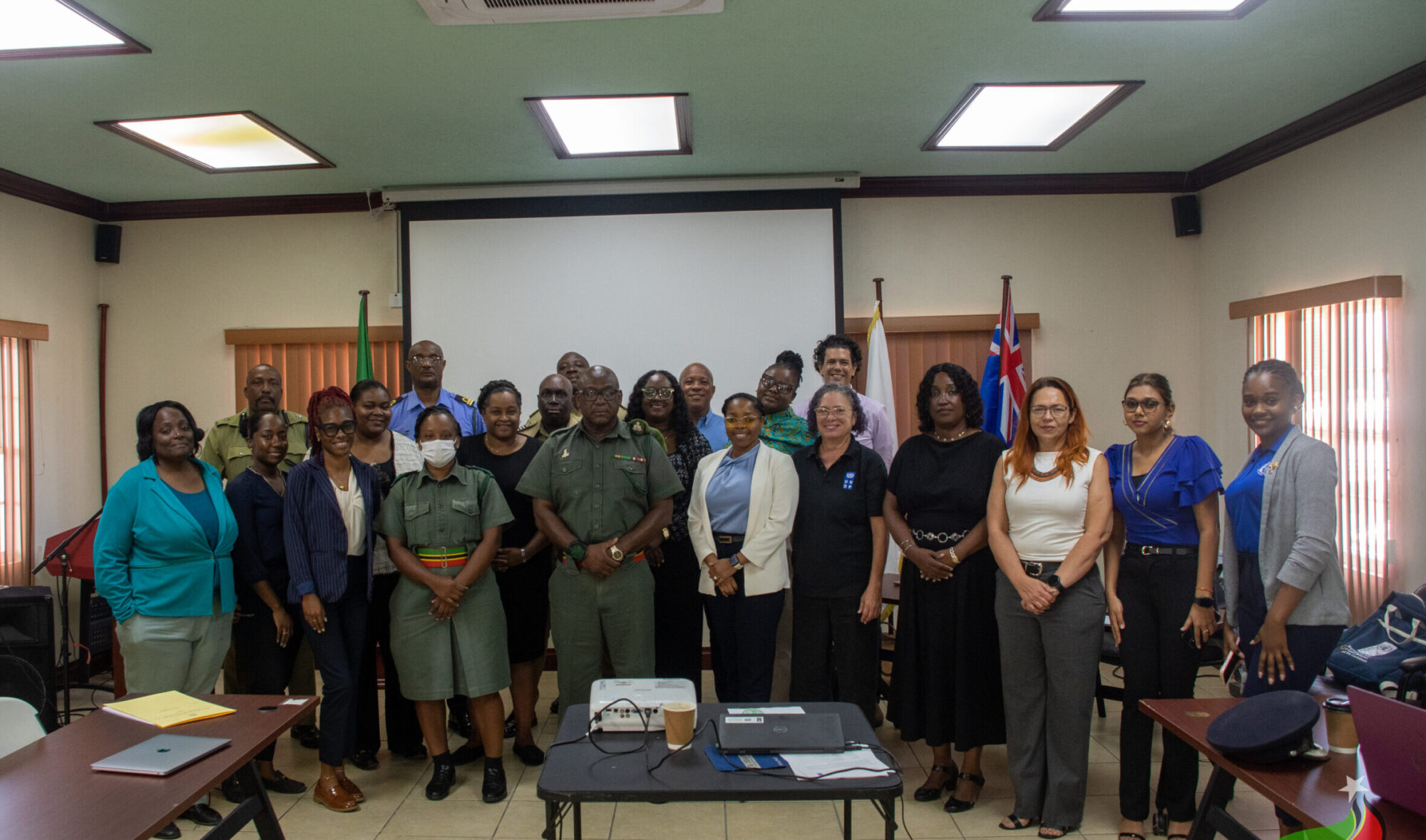
Basseterre, St. Kitts– As part of its Access to Justice Agenda and the broader commitment to Democratising Access, the Attorney General’s Office and Ministry of Justice and Legal Affairs, in collaboration with the United Nations Development Programme (UNDP), convened senior leaders and key officials from across the justice, security, and social sectors on January 20, 2026, at the Customs and Excise Department.
The workshop formed part of the Ministry’s ongoing justice sector reform and institutional training programme, aimed at strengthening workplace culture, accountability, and professional standards within public institutions.
This session marked the first of two workshops scheduled for the week, with a subsequent targeted engagement planned for the Office of the Director of Public Prosecutions later in the week.
Participants were provided with a structured and practical forum for open dialogue, reflection, and learning, with particular focus on:
- Leadership and workplace culture
- The critical distinction between intention and impact
- Internal mechanisms for addressing sexual harassment
The discussions underscored how everyday conduct, decision- making and organisational responses can either reinforce or undermine safe, respectful, and professional working environments- an essential consideration in ensuring equitable access to justice for both employees and the public they serve.
Within the context of the Sustainable Island State Agenda, participants examined how internal workplace practices directly influence institutional credibility and public trust. Safe, respectful, and accountable work environments were positioned as foundational to sustainable governance, particularly within justice sector institutions that serve as pillars of the rule of law.
A central theme of the session was the gap between intention and impact, encouraging leaders to critically assess how actions, irrespective of intent, may affect colleagues and shape institutional culture. Through facilitated discussions and scenario- based group exercises, participants engaged in real- world situations designed to prompt reflection on behavioural norms, internal reporting frameworks, and the role of leadership in setting and enforcing clear standards of conduct.
Facilitated by regional specialists, the workshop highlighted the importance of proactive leadership in fostering environments where all employees can carry out their duties with dignity, safety, and professionalism- core principles underpinning the Ministry’s justice reform and capacity- building efforts.